BACKDROP

BY LEANDER C. DOMINGO
IN Barangay Bitnong, Dupax del Norte, a P2.1-million hanging bridge now connects Purok Bingo 1 and Purok Bingo 2, and stretches of farm-to-market road in Sitio Keon and Sitio Bingo have been concreted through the provincial government’s Dalan ti Umili program — 650 bags of cement from the province, labor from the barangay.
For Barangay Captain Bert Gorio and his constituents, the meaning is immediate and practical. Farmers can move their produce even when it rains. Children can go to school without risking a river crossing. A new P1-million day care center is on the way. It is easy to understand why Gorio thanked Governor Jose Gambito.
This is development at its most basic and most felt. And it is happening across Nueva Vizcaya’s uplands.
But every road built upland asks a second, harder question: what else does it open?
The first answer is livelihood.
An upland road shortens distance to the market, cuts hauling costs, reduces post-harvest losses. A farmer who used to carry sacks on foot or pay high habal-habal fees can now bring more, fresher, faster. Prices improve. Traders come closer. When mobility improves, farming becomes viable as a business, not just subsistence.
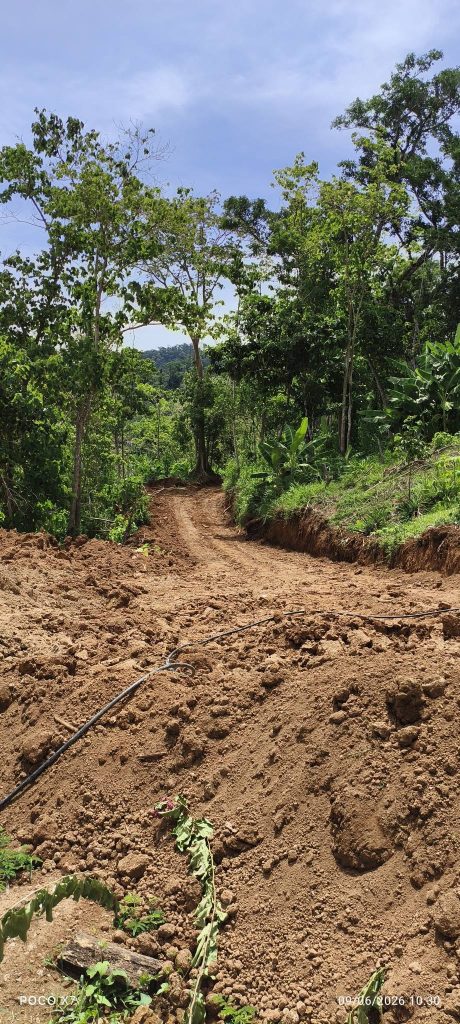
For a province that depends on agriculture, that is not small. Farm-to-market roads are among the highest-return public investments.
The second answer is pressure.
The same road that brings produce out brings people in. It brings chainsaws, charcoal makers, and those looking for new patches to kaingin. It makes what was once a natural barrier — steepness, distance, inaccessibility — suddenly accessible.
In Nueva Vizcaya, our remaining forests are not in the lowlands anymore. They are in the uplands, exactly where Bitnong and many other barangays sit — in the buffer zones of watersheds, in ancestral domains, in areas that the Comprehensive Land Use Plan classifies as forest, not agricultural.
When a road is concreted, land values nearby rise. The temptation to extend farms beyond the suitable slope — to clear secondary forest because the road is now there — becomes strong.
We have seen this pattern before: good road, more corn, then more erosion, then less water downstream.
The challenge, therefore, is not whether to build upland roads. We must. But how to build them with a clear line between production and protection.
Three things can help:
1. Build with a land-use map, not just a cement map. Before another bag of cement is poured, barangay and municipal LGUs should reaffirm which areas are open for agriculture and which are not. The road should serve the first and stop at the edge of the second.
2. Pair the road with tenure and enforcement. Farmers with secure tenure farm better and clear less. At the same time, Bantay Gubat, DENR and LGUs need presence where the road ends and the forest begins.
3. Make the road carry more than crops. If the only way to benefit from a road is to produce more area, we will lose forest. If the road also brings extension services, high-value crop support, and consolidation areas that raise yield without expanding area, then preservation becomes possible.
Bitnong’s new bridge and road are worth celebrating. They are the product of counterparting — province, municipality and barangay working together. They prove that small projects, P2.1 million here, 650 bags there, change lives.
The next step is to make sure that the same road that helps a farmer bring his harvest to Dupax does not make it easier for someone else to bring the forest down to the market.
A road is never just concrete. It is direction. We should choose where it leads.